Ready to seek assistance with your US taxes?
Filing US taxes as an American abroad is complex. We help make it easy for you.



A few years ago, a client came to us who had not filed a US tax return in seven years.
He had moved to the Netherlands for work, started a family there, built a life there. The first year he missed the filing deadline, he told himself he would catch up the following year. The second year became the third. By year seven he had convinced himself the situation was so far gone that there was no good path forward. He was not sleeping well. He was afraid to travel back to the US. He had spent years quietly carrying a problem he did not know how to solve.
We looked at his situation.
He owed some back taxes. He had some FBAR filings to catch up on. But there was no criminal exposure, no catastrophic penalty. The situation was serious, but it was completely manageable. Within about nine months he had a clean filing record and had not paid anything close to what he had been imagining for seven years.
That story is not unusual. It is actually fairly representative of what we see.
The reason most Americans abroad fall behind on US tax filings is not dishonesty. It is overwhelm.
US tax obligations for citizens living outside the country are genuinely complex and not well understood, even by many tax professionals. The first year abroad often passes in a blur of logistical adjustments. By the time the filing deadline comes around, it either gets missed entirely or filed incorrectly. Once that happens, the perceived cost of addressing it keeps growing, while the actual cost of addressing it stays roughly the same.
The fear compounds. The problem does not.
What is actually waiting on the other side of this situation is almost always less severe than what people have been imagining.
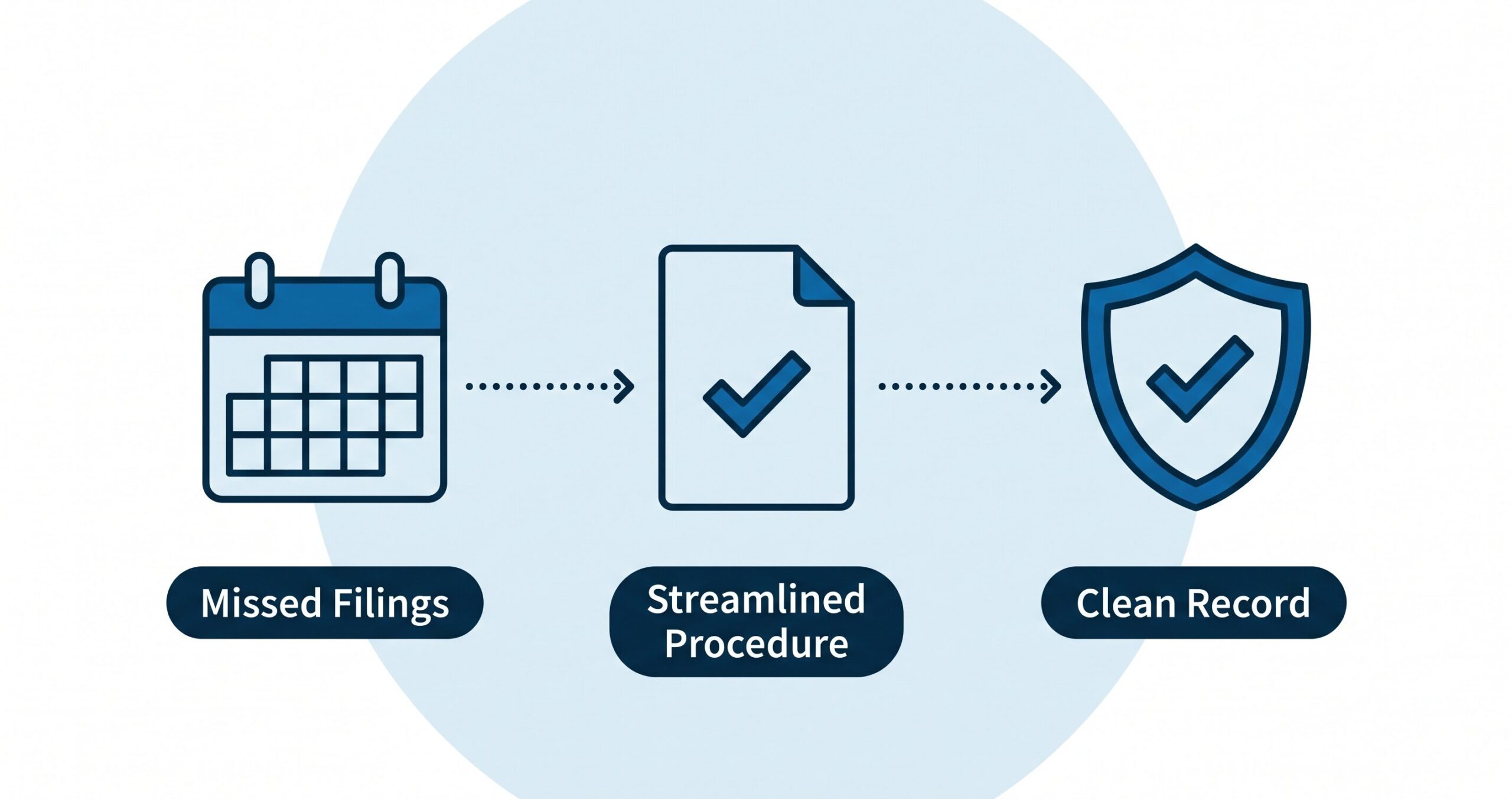
The IRS has a program specifically designed for Americans abroad who are behind on their filings. It is called the Streamlined Foreign Offshore Procedure, and it exists because the IRS recognizes that citizenship-based taxation is not well understood, and that many non-filers are non-filers because of confusion, not intent.
To qualify, you need to meet two conditions. First, you need to be a US citizen or green card holder whose tax home has been in a foreign country for at least one of the three most recent tax years. Second, your non-compliance needs to be non-willful. That means you were not deliberately hiding income or trying to evade taxes. You genuinely did not know what was required, or you knew and got overwhelmed and did not know where to start. That covers the vast majority of people who come to us.
Under the Streamlined Procedure, you typically file the three most recent years of delinquent tax returns and six years of FBARs. The program is designed for people who made an honest mistake, not for people who deliberately concealed assets. The penalty exposure under this program is significantly lower than what applies outside of it, and lower still than what would apply if the IRS contacted you first rather than the other way around.
Coming forward proactively is the single most important variable in how the situation resolves.
Here is a realistic timeline, with the caveat that every situation is different and complexity affects timing.
Phase 1: Gathering documents (2 to 4 weeks)
This is usually the part that takes the longest and is most within your control. You will need income records for each year being filed, foreign bank account statements showing maximum balances for FBAR purposes, any prior tax returns you do have, and documentation of any foreign assets or business interests that may trigger additional reporting.
For most people this phase takes two to four weeks. It can run longer if records go back many years, span multiple countries, or involve foreign company ownership. Getting organized at this stage makes everything that follows significantly faster.
Phase 2: Preparation (4 to 8 weeks)
Once all documents are in hand, preparing the returns and FBAR filings typically takes four to eight weeks depending on how many years are involved and how complex the income picture is. A few years of straightforward employment income from a single country moves faster than a longer period with freelance income, rental properties, foreign pensions, or a foreign company.
This phase also involves determining which tools apply to your situation: the Foreign Earned Income Exclusion, the Foreign Tax Credit, applicable tax treaties. In many cases, people who have been avoiding filing discover during this phase that they owe significantly less than they assumed, because these tools were available all along and simply were not being applied.
Phase 3: Submission and IRS processing (several months)
The Streamlined Procedure has its own submission process, separate from a standard tax return filing. Once everything is submitted, IRS processing takes several months. This part is largely out of your hands, and that is okay. The significant work is done at this point.
In total, from the moment you decide to start, to having a clean filing record, you are typically looking at somewhere between six months and a year. That sounds significant. But for most people who come to us, the months of process feel like nothing compared to the years of anxiety that preceded it.
The outcome under the Streamlined Procedure is almost always better than what people feared.
For many clients, the process reveals that the actual tax owed is lower than anticipated, because the FEIE and Foreign Tax Credit were available the whole time. In some situations there is meaningful tax owed, and in some situations there are penalties, but these are generally far lower than what would apply to someone who was found by the IRS rather than coming forward voluntarily.
The client in the Netherlands owed some back taxes and paid them. He also had FBAR penalties that were addressed through the Streamlined Procedure at a fraction of what standard late penalties would have been. Nine months after coming to us, he had a clean record, no criminal exposure, and was traveling freely again.
He told us afterwards that starting the process was the biggest relief, not finishing it. Just knowing there was a clear path forward changed everything.
The Streamlined Foreign Offshore Procedure is the right path for most non-willful non-filers. But there are situations where a different approach may be more appropriate.
If you have already been contacted by the IRS about delinquent returns, the Streamlined Procedure is no longer available. If your non-compliance involved willful intent, a different program applies. If you missed FBARs but filed your tax returns correctly each year, the Delinquent FBAR Submission Procedures may be more relevant than the Streamlined Procedure.
These distinctions matter, and they are worth working through with someone who handles this area regularly. The right path forward depends on the specific facts of your situation, not a general framework.
How many years do I need to file under the Streamlined Procedure?
Typically three years of delinquent tax returns and six years of FBARs. If you have more years outstanding beyond that, the approach depends on your specific situation and whether the additional years trigger any other considerations.
Will I face criminal charges for not filing?
For the vast majority of non-willful non-filers who come forward proactively through the Streamlined Procedure, criminal exposure is not a realistic concern. The IRS pursues criminal cases for deliberate tax evasion, not for Americans abroad who genuinely did not understand their obligations.
What if I filed some years but not others?
This is a common situation and it does not disqualify you from the Streamlined Procedure. The approach for mixed compliance depends on which years were filed, whether they were filed correctly, and what the gaps look like. A professional review of the full picture will clarify the right path.
How much will I owe?
There is no universal answer. Many people owe less than they expect because the FEIE and Foreign Tax Credit offset a significant portion of the liability. Some owe nothing in additional tax and only need to address the filing gap. Some owe back taxes and some form of penalty. The only way to know is to prepare the returns.
What happens after I submit through the Streamlined Procedure?
IRS processing typically takes several months. In most cases you receive confirmation that the submission has been processed and your account is current. There is no automatic audit triggered by a Streamlined submission, though the IRS retains the right to examine returns as it does with any filing.
If you have missed US tax filings and are not sure where to start, a consultation is the most useful first step. We will look at your specific situation, tell you exactly what is involved, and give you a realistic picture of what catching up would look like.
Filing US taxes as an American abroad is complex. We help make it easy for you.